



Vision
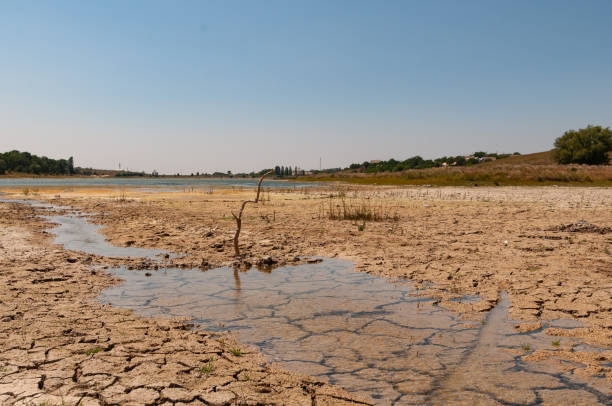
Land and Water Technologies Department (LWTD) aims to carry out scientific research in order to manage and develop land resources (soil, water & air) - to protect them from land degradation factors under various environmental conditions.
Mission
Enhancement of soil and water systems in the Egyptian agro-ecosystem is our main objective. Land system bring together a unique multidisciplinary mix of expertise in soil chemistry, physics, biology and informatics. Our research sets out to better understanding and optimized management of the agro-ecosystem, land management, land sustainability and soil health programs. Spatial land information involves landscape analysis and ecological modeling using remote sensing data and Geographic Information System (GIS). We look forward to provide serves for the surrounding agricultural communities. Moreover, provide research training for the under- & post-graduate students in soil science, soil-plant interactions and spatial information analysis through scholarships funded by the Academy of Scientific Research & Technology (ASRT). There is a fruitful international collaboration with several research partners. Strategic Goals: The integrated management and conservation of land resources in order to maximize productivity, provide safe food, sustain agricultural development, and preserve the environment. This is through the implementation of scientific research accurately to serve the community and solve the problems and obstacles that facing the agricultural sector, particularly land and water. In addition, raising the researcher’s efficiency to innovate, develop and participate in the implementation of awareness & training programs for knowledge transfer and science simplifying. Encourage the multi-disciplinary research trends to develop the scientific research system and implement the national strategic plan 2030. The department’s plan includes the following strategic objectives: Pioneer of applied research and technical studies in the field of cultivation and development of arid and semi-arid lands, with emphasis on new reclaimed areas for agricultural utilization. The department has a prominent contribution and role to the development and qualification of human cadres through organizing seminars, conferences, workshops and specialized training courses. Using modern technologies to maximize agricultural production and market access with safe agro-products. Management and sustainable development of land & water resources. The maximization of irrigation water use efficiency through implementing the modern irrigation systems. Research on wastewater reuse for agriculture purposes, and the studies of optimal methods for rainwater harvesting. Research fields: Soil fertility and plant nutrition. Land evaluation and Soil survey. Application of GIS utilities and Remote Sensing data in agriculture use. Land management, conservation and sustainable land use planning. Immobilization of hazardous elements and persistent organic substances in soil. Remediation methods and decontamination of health hazardous soils. Retrospective monitoring of hazardous elements in soil and water. Application of clay minerals. Soil microbiology and bio-surfactants. Dissolved organic matter (DOM) release and retention in soil. Dissolved organic matter (DOM) and Soil Proteomics. Applications and effects of municipal and agricultural soil waste (MSW and ASW) composts. Application of analytical methods for testing soil, plant, water, fertilizer and pollutants. Soil studies and crop response testing. Waste management for soil remediation. Water and wastewater analysis and its assessment. Study the desert combating elements in regard to soil and water conservation. Study land degradation and pollution factors and the rehabilitation of contaminated areas. Evaluation and judging of regional environmental load with pollutants, including the related GIS. More attention to the scientific research for sustainable, highly productive land and more international agro-competition. Beneficiary: Universities, research institutes, agricultural research stations and agricultural extension agro-societies. Providing the research outputs and consultations to investors, stakeholders, decision makers and industry. Researchers, students, civil society and all whom interested in the scientific research. Strengthening agro-extension channels, community service and the development of surrounding rural communities.