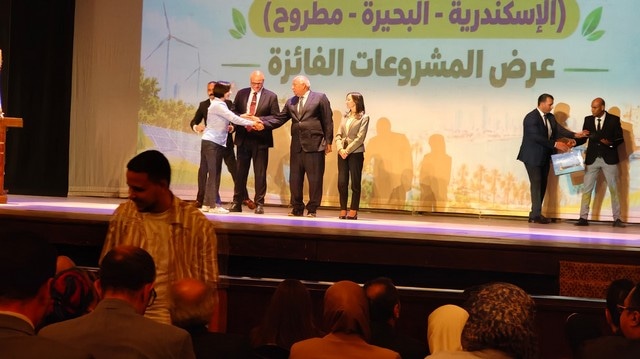
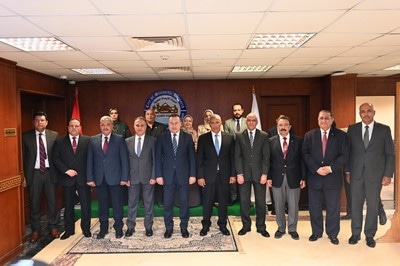
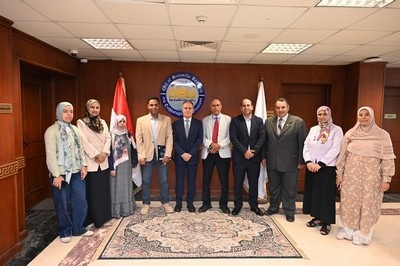
Prof. Dr. Mohamed Rashad Abdel Fattah, Acting Director of the Scientific Research and Technological Applications City (SRTA City), announced that a research team from the City had won first place and qualified for the national-level final round in the “Women’s Projects and Climate Change” category of the fourth edition of the National Initiative for Smart Green Projects, affiliated with the Ministry of Planning and Economic Development.The announcement was made during a ceremony held at the Alexandria Opera House, hosted by Alexandria Governorate, to showcase the winning and shortlisted projects and honor the winners from three governorates: Alexandria, Beheira, and Matrouh. The award-winning project, titled “TERRAGUT,” stood out in a highly competitive field of 626 projects submitted in Alexandria Governorate. Of these, 72 projects were selected for presentation to the evaluation committee, and 16 projects were ultimately declared winners. The event took place on Sunday, October 18, 2026.Scientific and Applied Outcomes of the ProjectRegarding the scientific and practical outcomes of the research undertaken by the participating team from SRTA City, the team comprised:Dr. Hager Saeed Abdel Rabbo, Assistant Research Professor, Food Technology Department.Dr. Mai El-Sayed Khadr, Researcher, Land and Water Technologies Department.Dr. Sami Zaki Mohamed, Researcher, Land and Water Technologies Department, Institute of Arid Lands Cultivation Research.Dr. Moataz Hassan Khalil, Researcher, Computer Engineering Applications Department, Informatics Institute.Eng. Amir Ahmed Ibrahim, Engineer, Soil and Water Sciences Department, Faculty of Agriculture, Alexandria University.The “TERRAGUT” project offers an integrated circular economy system designed to improve the productivity of calcareous soils and reduce the use of mineral fertilizers by up to 70%. It relies on natural organic compounds derived from agricultural and food waste. The system was tested at SRTA City’s experimental farm over two consecutive years.The project aims to produce crops with high nutritional and economic value and manufacture premium-quality food products. It also incorporates an intelligent system for managing and optimizing water consumption and soil nutrients through comprehensive sensor devices. Feasibility studies have been conducted for all project components.SRTA City’s Commitment to Sustainable Development and Green TransformationIn this context, Prof. Dr. Mohamed Rashad Abdel Fattah expressed his great pride and appreciation for this achievement, emphasizing that the award reflects the City’s ongoing efforts to harness applied scientific research in support of Egypt’s sustainable development plans and green transformation.He also explained that the project represents an integrated agricultural and industrial model of the circular economy, relying on innovation to reclaim calcareous soils and optimize the use of water and fertilizers on a broad scale. He stressed the City’s commitment to providing all forms of support to its scientists and researchers to transform outstanding research outcomes into practical solutions that help address climate change and strengthen the national economy.High-Level AttendanceThe event was attended by Eng. Ayman Attia, Governor of Alexandria; Dr. Jacqueline Azar, Governor of Beheira; and Major General Dr. Mohamed El-Zamlout, Governor of Matrouh.Other attendees included Dr. Amira Heikal, Deputy Governor of Alexandria; Dr. Mahmoud Eissa, Assistant Secretary-General of the Governorate; a distinguished group of executive officials and deputy governors; representatives of the Ministries of Environment and Communications; members of the House of Representatives and the Senate; prominent university deans and professors; representatives of chambers of commerce; business leaders; and representatives of civil society organizations.Empowering Women and Promoting the Green EconomyIt is worth noting that the TERRAGUT project is fully applicable and can benefit both men and women in the fields of sustainable agriculture and food processing. This enhances the comprehensive concept of economic and social empowerment and supports the inclusion of women and all segments of society in addressing the impacts of climate change and implementing green economy solutions.

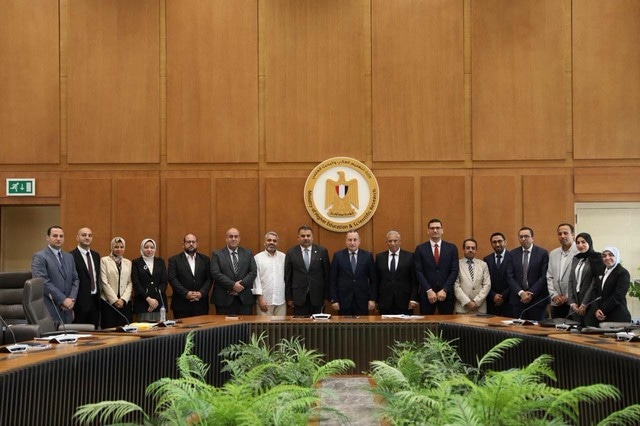
In a step that strengthens academic and research partnerships between the Arab Republic of Egypt and Japan, the Science and Technology Development Fund — (SRTA City) participated in the implementation of the STI Leadership Program (Science, Technology and Innovation Leadership Program), under the Egyptian-Japanese Education Partnership (EJEP). The program aimed to introduce a specialized Egyptian delegation of 13 academics and researchers to Japan’s advanced experience in managing science, technology, and innovation systems, providing them with first-hand insights into the policies and mechanisms that support linking scientific research with industry and developing human resources.As part of the direct commitment to supporting and empowering research personnel, Prof. Dr. Abdelaziz Konsowa, Minister of Higher Education and Scientific Research and Acting Minister of Culture, met with a number of Egyptian researchers participating in training programs in Japan. Among them was Dr. Marwa Mostafa Hassan El-Tarhouni, Assistant Research Prof. in the Environmental Biotechnology Department at the Genetic Engineering and Biotechnology Research Institute at SRTA City. The meeting discussed ways to maximize the benefits of the expertise acquired and transfer modern technologies to national institutions.During the meeting, the Minister emphasized that Egyptian-Japanese cooperation in education, scientific research, and human resource development represents an important model of international partnership that contributes to preparing qualified professionals capable of keeping pace with scientific and technological advancements. He also stressed the importance of maximizing the benefits of joint training programs and aligning their outcomes with the needs of Egyptian institutions.In this context, Prof. Dr. Mohamed Rashad Abdel Fattah, Acting Director of SRTA City, highlighted the importance of the program and the fruitful cooperation between the two sides. He explained that the STI Leadership Program represents a strategic step toward transferring knowledge and localizing international expertise in science and technology. It enabled the Egyptian delegation to gain first-hand exposure to some of the most advanced models of innovation management and effective collaboration between universities and industrial institutions.He added that the field visits to Japanese research centers and major companies provided an inspiring experience that directly contributes to supporting the knowledge-based economy and achieving the desired digital and technological transformation. SRTA City takes pride in having its distinguished researchers and scientific professionals represent an inspiring national model, capable of absorbing and implementing international best practices in ways that enhance the efficiency of scientific research management and serve the country's development priorities.For her part, Dr. Marwa Mostafa Hassan El-Tarhouni explained that the program aimed to deepen participants’ understanding of the fundamental pillars of the Japanese experience, particularly integration among different government institutions and effective collaboration between universities and the industrial and technological sectors.The program also featured a diverse range of activities, including scientific lectures, specialized workshops, and field visits to several leading Japanese universities, research centers, incubators, and industrial institutions. These activities covered the key factors behind Japan’s technological and industrial development.She noted that the field visits included the following:•Nagoya Life Science Incubator: Exploring the role of incubators in supporting Japanese entrepreneurship and the integrated support model for small and medium-sized enterprises.•NOBUNAGA Capital Village: Learning about its role in financing startups and promoting regional innovation in collaboration with financial partners such as Juroku Financial Group, as well as its investments in technology and artificial intelligence.•STATION Ai – Innovation and Entrepreneurship Center: Visiting the startup support center in Aichi Prefecture, which brings together approximately 600 startups and 400 industrial partnerships in collaboration with major organizations such as Toyota, DENSO, and Nagoya University.•DAIDO Company: Exploring a company specializing in industrial robotics and the supply of technological systems for load transportation, packaging, and precision material handling applications.Toyota Museum: Reviewing the development of Japanese industry and the Monozukuri philosophy, which emphasizes creativity, quality, and cost reduction.•DENSO Factory: Visiting production lines for precision automotive components and observing the integration of human workers and robots in accordance with the Kaizen principles of continuous improvement.Brother Museum: Exploring the company’s history, the development of digital devices, its environmental initiatives, and its strategy toward 2030.•Kunishima Co., Ltd. – Spinning and Textile Factory: Learning about the company’s manufacturing experience dating back to 1850 and its use of artificial intelligence to detect defects.•Nagoya University and Toyota Technological Institute: Attending a lecture on the shift in infrastructure philosophy toward smart maintenance using artificial intelligence, and visiting cleanroom laboratories classified in accordance with ISO standards.

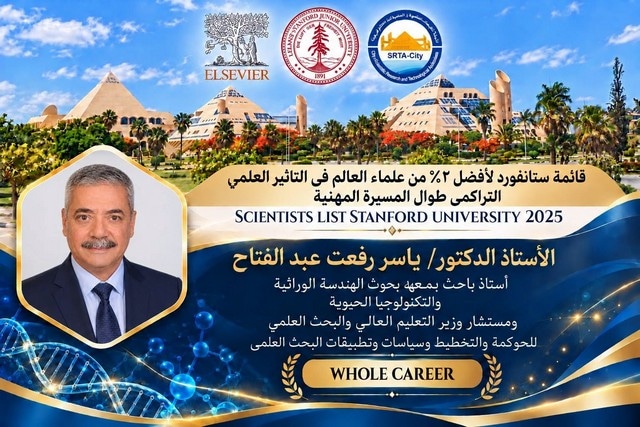
Prof. Dr. Mohamed Rashad Abdel Fattah, Acting Director of the City of Scientific Research and Technological Applications (SRTA City) in Borg El Arab, announced that 21 of SRTA City’s scientists and researchers have been included in Stanford University’s Stanford/Elsevier Top 2% Scientists List, which recognizes the world’s most influential scientists. The list is published annually by Stanford University in collaboration with the international publishing company Elsevier.The list includes Prof. Dr. Yasser Refaat Abdel Fattah, Research Prof. at the Genetic Engineering and Biotechnology Research Institute and Advisor to the Minister of Higher Education and Scientific Research for Planning, Governance, and Research Policies and Applications. He was recognized among the world’s top 2% scientists based on his overall scientific output throughout his career (Whole Career).The list also includes the following scientists, who were recognized among the world’s top 2% scientists in both the Whole Career and Single Year categories:Prof. Dr. Hisham El Enshasy, Research Professor at the Genetic Engineering and Biotechnology Research Institute , Professor at University of Technology Malaysia (UTM), and Global Bioeconomy Ambassador to Malaysia and Indonesia,Prof. Dr. Ismail El-Fakharany, Research Prof. at the Genetic Engineering and Biotechnology Research Institute.Prof. Dr. Sobhi Ahmed Azab El-Suhaimi, Research Professor at the Arid Lands Cultivation Research Institute.Prof. Dr. Mohamed Samir Mohy El-Din, Research Prof. at the Advanced Technology and New Materials Research Institute.Prof. Dr. El-Badawy Abdel Aziz Kamoun, Research Professor at the Advanced Technology and New Materials Research Institute.Prof. Dr. Ahmed Mohamed Omar Mohamed, Research Professor at the Advanced Technology and New Materials Research Institute.Prof. Dr. Tamer Mahmoud Tamer, Research Professor at the Advanced Technology and New Materials Research Institute.The list further includes the following scientists, who were recognized among the world’s top 2% scientists based on their scientific impact during the current year (Single Year):Prof. Dr. Reda Abdel Aziz Abu Shanab, Research Prof. at the Genetic Engineering and Biotechnology Research Institute.Prof. Dr. Amr Abdel Fattah Emara, Research Prof. at the Genetic Engineering and Biotechnology Research Institute.Prof. Dr. Shahira Husseiny El-Moslemy, Research Prof at the Genetic Engineering and Biotechnology Research Institute.Prof. Dr. Nora El-Ahmady El-Naggar, Research Professor at the Genetic Engineering and Biotechnology Research Institute.Prof. Dr. Marwa Mohamed Abu Sarea, Research Prof. at the Genetic Engineering and Biotechnology Research Institute ، Prof. Dr. Mohamed Adel Ali Hassan Research Professor at the Genetic Engineering and Biotechnology Research Institute.Prof. Dr. Mohamed Abdel Rahman Mohamed, Research Prof. at the Informatics Research Institute.Prof. Dr. Gomaa Farouk Kamel El-Fawal, Research Prof. at the Advanced Technology and New Materials Research Institute.Prof. Dr. Ahmed Ibrahim Abdel Hamid, Research Prof. at the Advanced Technology and New Materials Research Institute.Dr. Hassan Shokry, Assistant Research Prof. at the Advanced Technology and New Materials Research Institute.Dr. Hamada Mohamed Ibrahim Mansour, Assistant Research Prof. at the Genetic Engineering and Biotechnology Research Institute.Dr. Ahmed Abdel Khaleq Ahmed Ibrahim, Assistant Research Prof. at the Arid Lands Cultivation Research Institute.Dr. Hesham Ali Fahmy Hamad, Assistant Research Prof. at the Advanced Technology and New Materials Research Institute.Prof. Dr. Mohamed Rashad emphasized that this scientific achievement reflects the distinguished international standing of SRTA City’s scientists in the global academic community. He explained that the inclusion of the City’s researchers in this prestigious international list demonstrates the quality and excellence of its scientific output and confirms the ability of Egyptian research professionals to compete on the international stage and develop innovative solutions to support sustainable development.He added that this international recognition represents a valuable addition to SRTA City’s record of excellence and contributes to enhancing the global standing and ranking of the City of Scientific Research and Technological Applications among research centers and institutions worldwide. He also stressed that the City’s management remains committed to providing a supportive research environment and advanced infrastructure that enable its scientists to continue their contributions and pursue further scientific and technological advancements.Prof. Dr. Mohamed Rashad further explained that Stanford’s list relies on data extracted from the global Scopus database. The selection criteria extend beyond the number of published research papers, focusing primarily on research impact and the number of citations received.The list is divided into two main categories. The first assesses career-long research impact, reflecting the cumulative scientific influence of a researcher’s entire career. The second evaluates single-year research impact, measuring outstanding research performance during the most recent year.Prof. Dr. Mohamed Rashad concluded his statement by commending the dedicated scientific efforts of SRTA City’s researchers and affirming that this achievement serves as a strong incentive to continue their hard work and develop further innovations that advance scientific research and benefit society.

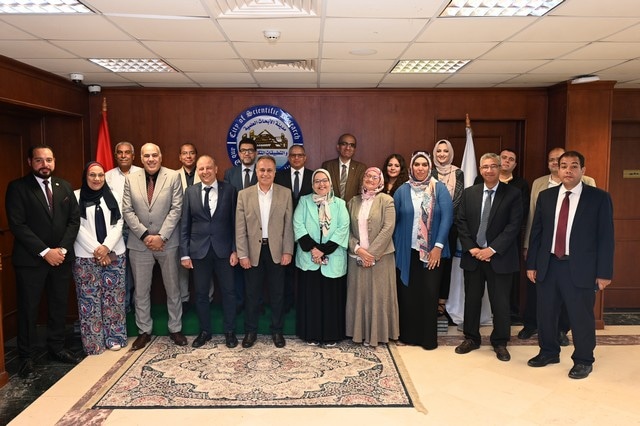
As part of its efforts to support the scientific research ecosystem and strengthen collaboration between academic and research institutions, Prof. Dr. Mohamed Rashad Abdel Fattah, Acting Director of the City of Scientific Research and Technological Applications (SRTA City), received a high-level delegation from the Egypt-Japan University of Science and Technology (E-JUST), headed by Prof. Dr. Ahmed El-Sabbagh, President of the University, and attended by the Deans of SRTA City’s Research Institutes and the Deans of the University’s Faculties. The meeting aimed to explore ways to enhance joint cooperation and lay the groundwork for signing a cooperation protocol between the two sides. The meeting was held on Tuesday, September 29, 2026.The meeting began with a comprehensive presentation delivered by Prof. Dr. Mohamed Rashad, providing an overview of SRTA City. He highlighted the infrastructure and scientific facilities of its affiliated institutes and research centers and reviewed the City’s major ongoing projects, research activities, and technological services. The presentation aimed to establish common ground and identify areas of mutual benefit between the two sides, paving the way for developing implementation frameworks and signing a cooperation protocol designed to strengthen the strategic partnership and contribute to the objectives of sustainable development and the advancement of national industry.During the meeting, Prof. Dr. Mohamed Rashad emphasized the importance of strengthening integration and cooperation between SRTA City and the Egypt-Japan University of Science and Technology, as two leading iorganizations within Egypt’s science and technology ecosystem and key drivers of innovation and development in New Borg El Arab. He noted that expanding cooperation with distinguished academic and research institutions is an integral part of the City’s future strategy, which focuses on building strategic partnerships aimed at unifying efforts, exchanging expertise among researchers and heads of research groups, and maximizing the utilization of advanced infrastructure and specialized laboratories. He also stressed SRTA City’s strong commitment to supporting teamwork and providing an enabling environment for researchers to enhance the quality of scientific outputs and transform them into tangible practical applications.For his part, Prof. Dr. Ahmed El-Sabbagh expressed his appreciation for the pivotal role played by SRTA City, commending the advanced infrastructure and laboratory expertise available at the City. He noted that E-JUST places great emphasis on expanding its scientific partnership network in order to provide a fertile environment that supports researchers and postgraduate students and advances joint scientific research.The visit program included a field tour of several specialized research institutes and centers at SRTA City. During the tour, the delegation reviewed the available laboratory capabilities and advanced scientific equipment and received detailed briefings from the Deans of the institutes and centers on the most prominent ongoing research projects and technological applications.At the conclusion of the visit, Prof. Dr. Mohamed Rashad Abdel Fattah presented the “Golden City Medal” to Prof. Dr. Ahmed El-Sabbagh in recognition of his distinguished academic and pioneering role, and as an affirmation of the depth of the fruitful relations between the two institutions and their shared commitment to continuing coordination and exchanging expertise in areas of mutual interest.

As part of the state’s efforts to support the scientific research and innovation ecosystem, the City of Scientific Research and Technological Applications) SRTA City) held a meeting of its Board of Directors, chaired by Prof. Dr. Abdelaziz Konsowa, Minister of Higher Education and Scientific Research and Acting Minister of Culture.The meeting was attended by Prof. Dr. Mohamed Rashad, Acting Director of the City; Prof. Dr. Ahmed Adel Abdel Hakim, Acting President of Alexandria University; Prof. Dr. Walaa Sheta, CEO of the Science, Technology and Innovation Funding Authority; Prof. Dr. Mamdouh Moawad, President of the National Research Centre and Acting President of the Academy of Scientific Research and Technology; Prof. Dr. Emad El-Din Mohamed, Acting Secretary-General of the Council of Research Centers, Institutes and Bodies; Prof. Dr. Yasser Refaat, Advisor to the Minister of Higher Education and Scientific Research for Governance, Planning, and Research Applications and Policies; in addition to members of the Board and representatives of the industrial sector.The meeting was held on Tuesday, September 22, 2026, at SRTA City’s headquarters in Borg El Arab.Prof. Dr. Abdelaziz Konsowa reaffirmed the Ministry’s continued support for the City of Scientific Research and Technological Applications, emphasizing its role as one of the key national institutions within Egypt’s scientific research system. He highlighted the importance of strengthening SRTA City’s role in promoting innovation, technology transfer and localization, and maximizing the use of its human and research capabilities in support of national development objectives and the Egyptian economy. This comes in light of the attention given by the state, under the leadership of President Abdel Fattah El-Sisi, to advancing the national system of scientific research and innovation.Prof. Dr. Mohamed Rashad explained that the City is fully mobilizing its scientific capabilities and human resources to address societal challenges and support sustainable development. This is achieved through developing innovative scientific solutions tailored to real challenges facing industry and society.He also expressed his deep appreciation for the continuous and tangible support provided to SRTA City by the political leadership and senior officials in higher education and scientific research. He emphasized that this support represents a major driving force for the City’s team to continue fostering innovation and translating research results from laboratories into production lines.During the meeting, Prof. Dr. Mohamed Rashad delivered a comprehensive presentation outlining the City’s operational vision and future strategy for linking scientific research with the needs of industry and society. He reviewed key work plans and ongoing research projects, highlighting innovative scientific and technological outputs in vital fields, including energy, advanced materials, and biotechnology.He also addressed the City’s efforts to enhance international scientific publications, register patents, and transform applicable research outputs and findings into economically viable products and applications that contribute to achieving the Sustainable Development Goals.On the sidelines of the meeting, the Minister and Board members conducted a field visit to the exhibition of research products developed by the City’s institutes. They reviewed a number of innovative research products and applications, including:Products supporting sustainable and organic agriculture, such as Green Compost, liquid organic fertilizers based on humic substances, and advanced biofertilizers, aimed at increasing agricultural productivity and ensuring food safety.Technologies for producing biochar from agricultural waste.Solar reflective mirrors and advanced LED technologies.Water desalination units and biogas plants.Solutions for industrial wastewater treatment.Plastic recycling technologies for producing carbon-based materials with economic value.Advanced innovations in agriculture, nutrition, and healthcare.These research outputs demonstrate SRTA City’s capacity to translate scientific research into tangible solutions and practical applications that address developmental and societal needs,

The Scientific Research and Technological Applications City (SRTA-City) seeks to optimize investment in the capabilities of its human resources, recognizing them as the primary driving force behind the innovation ecosystem and a cornerstone of sustainable research excellence. SRTA City adopts an integrated vision aimed at enhancing the laboratory and field work environment and fostering a culture of total quality, in alignment with the state's strategic vision for maximizing the impact of scientific research and technological development.In this regard, the City relies on Key Performance Indicators (KPIs) as an objective and accurate tool for evaluating efficiency and encouraging scientific contributions. This commitment is clearly reflected in SRTA City administration's continued dedication, for the second consecutive year, to honoring a distinguished group of researchers and scientists who achieved the highest scores on these indicators across its various institutes and research centers. The honoring ceremony took place on Thursday, September 17, 2026.In his speech to the researchers during the honoring ceremony, Prof. Dr. Mohammed Rashad Abdel Fattah, Acting Director of the City, emphasized that evaluation based on Key Performance Indicators is not limited to research activities and international scientific publications. It also places paramount importance on the extent to which research is connected to practical applications.He pointed out that the criteria related to cooperation with the industrial sector, the provision of community services, and addressing development challenges carry the highest weighting in the evaluation. This takes into account SRTA City's vital role as a bridge transferring scientific outputs from laboratories into direct partnerships with industry and society.Continuing this annual tradition for the second consecutive year, Prof. Dr. Mohammed Rashad Abdel Fattah honored the distinguished researchers who achieved the highest Key Performance Indicator (KPI) scores for 2026 from the various institutes and centers affiliated with the City. The honorees were as follows:☆Institute of Genetic Engineering and Biotechnology ResearchDr. Nadia Abdel Mohsen – Research Prof. at the Institute.Dr. Salah Mahmoud Ali – Research Prof. at the Institute.Dr. Fayez Attia Kotb – Assistant Research Prof. at the Institute.☆Institute of Advanced Technology and New Materials ResearchDr. Abdel Hady Bashir Qashiwat – Research Prof. at the Institute.Dr. Norhan Nady Ibrahim – Research Prof. at the Institute.Dr. Sara Mohamed Abdel Azim – Researcher at the Institute.☆Institute of Arid Lands Cultivation ResearchDr. Younes Mohamed Rashad – Assistant Research Prof. at the Institute.Dr. Dalia Gamil Aseel – Assistant Research Prof. at the Institute.Dr. Mohamed Hafez Abdel Fattah – Researcher at the Institute.☆Institute of Informatics ResearchDr. Ghada Mohamed Fathy – Researcher at the Institute.☆Institute of Environmental and Natural Materials ResearchDr. Dina Mohamed Ahab – Researcher at the Institute.•Prof. Dr. Mohammed Rashad Abdel Fattah concluded the honoring ceremony by extending his sincere congratulations to the honorees. He expressed his hope that this recognition would serve as an additional incentive for all work teams and researchers at SRTA City to continue striving for excellence.He also called upon all institutes and centers to intensify their field and research efforts and harness all scientific capabilities to advance the quality of research outputs and technological applications, in a manner that serves national development priorities and reinforces the City's position as a leading research institution.