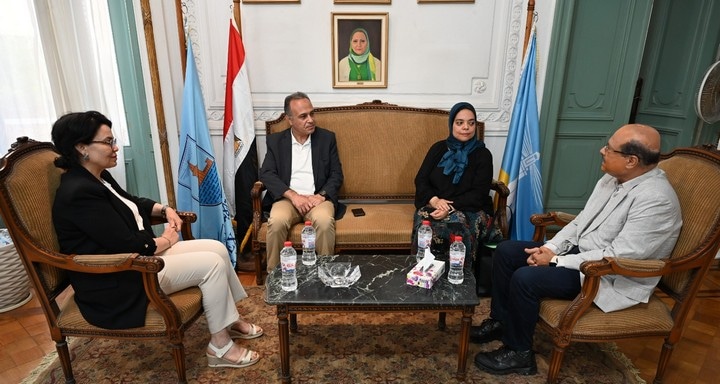
As part of efforts to support the scientific research system and foster integration between academic and research institutions to advance technology and innovation in Egypt, and upon the kind invitation of Prof. Dr. Ahmed El-Sabbagh, President of the Egypt-Japan University of Science and Technology (E-JUST), Prof. Dr. Mohamed Rashad Abdel Fattah, Acting Director of the Scientific Research City and Technological Applications (SRTA-City), paid an official visit to the headquarters of E-JUST, heading a delegation from SRTA-City that included the deans of its research institutes.The visit aimed to explore avenues for mutual cooperation and joint coordination, as well as to prepare for the signing of a cooperation protocol designed to maximize the utilization of the available capabilities and resources of both institutions. The meeting was attended by Prof. Dr. Yasser Refaat Abdel Fattah, Advisor to the Minister of Higher Education and Scientific Research for Planning, Governance, and Research Policies and Applications, along with the University’s Vice Presidents and Deans of Faculties. The visit took place on Monday, August 31, 2026.The meeting included discussions on frameworks for joint cooperation between the two institutions and coordination in preparation for signing a cooperation protocol aimed at achieving maximum benefit from their scientific, human, and technological capabilities. The protocol is intended to support the National Strategy for Science, Technology and Innovation 2030 and Egypt’s Sustainable Development Vision.Prof. Dr. Mohamed Rashad stated that the meeting focused on establishing the main outlines of the cooperation protocol, which is expected to be signed by both parties in the near future. The protocol will include clear implementation mechanisms, defined working mechanisms, and specific action plans and programs with established timelines to activate cooperation and ultimately develop joint projects and activities through an expanding partnership with an industrial-sector partner.In this context, Prof. Dr. Mohamed Rashad emphasized during the visit that this step comes in implementation of the Ministry of Higher Education and Scientific Research’s strategy to build bridges of communication between research centers and universities and to unify national efforts in support of comprehensive development objectives.For his part, Prof. Dr. Yasser Refaat underscored the importance of strengthening integration between universities and research institutions and linking available scientific and technological capabilities to the needs of the state as well as industrial and productive sectors. He highlighted the importance of supporting the transformation of research outcomes and innovations into applications with tangible economic and societal returns, while maximizing the use of the advanced research infrastructure available at research institutions.The visit also included an inspection tour for the SRTA-City delegation of the central laboratories and advanced research centers at E-JUST. The delegation reviewed the latest technological equipment and advanced scientific applications provided by the university in support of scientific research and innovation.Prof. Dr. Ahmed El-Sabbagh, President of the Egypt-Japan University of Science and Technology, expressed his appreciation for the visit, praising the pioneering role of the City of Scientific Research and Technological Applications as a distinguished scientific and research institution equipped with advanced laboratory facilities and highly qualified research personnel. He emphasized that the partnership with SRTA-City represents a pivotal step toward strengthening integration between academic outputs and industrial applications.At the conclusion of the visit, Prof. Dr. Mohamed Rashad Abdel Fattah and Prof. Dr. Ahmed El-Sabbagh exchanged commemorative shields in recognition of their mutual efforts and as an affirmation of the strong ties of cooperation and distinguished partnership between the two esteemed scientific institutions.
As part of the State’s vision to transform research outputs into industrial products with added value, and in continuation of ongoing efforts to strengthen the link between scientific research and the productive sector, in line with the national direction toward maximizing the utilization of innovations and intellectual property, Prof. Dr. Mohamed Rashad Abdel Fattah, Acting Director of the Scientific Research City and Technological Applications, held an extensive meeting with members of SRTA City’s Research Board.The meeting focused on developing a new action strategy aimed at preparing research outputs to become projects capable of industrial manufacturing and practical implementation through direct partnerships with the industrial sector. The meeting was held on Tuesday, August 25, 2026.Prof. Dr. Mohamed Rashad Abdel Fattah emphasized that the current phase requires a tangible transition from ideas and theoretical research to field application and commercial manufacturing. He explained that SRTA City is placing all its laboratory and research capabilities at the service of the needs of the national industry, noting that supporting integrated research groups and establishing direct partnerships with the industrial sector represent the true guarantee for transforming patents into tangible products with economic feasibility, enhancing the competitiveness of locally manufactured products, and supporting the national economy.The meeting addressed a number of key areas for institutional and research development, including:Directing researchers to submit projects as integrated research groups in order to increase their chances of acceptance and securing the necessary funding.Emphasizing the importance of establishing an internal committee and a clear evaluation mechanism within each institute to assess patents prior to their official submission, including evaluating their industrial feasibility and ensuring that the costs are commensurate with the anticipated benefits.Recommending the formation of multidisciplinary working teams comprising researchers alongside representatives from the industrial sector to rapidly assess the manufacturability and practical applicability of research outputs.Announcing the organization of an internal competition among research teams, inviting them to submit innovative proposals to be reviewed by a specialized committee. The winning team will receive the necessary support to implement and develop its project.

As part of efforts to strengthen institutional integration between Egyptian research centers and universities in support of innovation and nurturing talented individuals, as well as ongoing cooperation with Alexandria University as a key academic partner in advancing the research and innovation ecosystem, Prof. Dr. Mohamed Rashad Abdel Fattah, Acting Director of the Scientific Research City and Technological Applications in Borg El Arab, paid an official visit to the headquarters of the Faculty of Fine Arts at Alexandria University. He was received by Prof. Dr. Nevine Ghareeb El-Sayed, Dean of the Faculty, in the presence of a distinguished group of faculty leaders, department heads, and faculty members. The visit took place on Thursday, August 13, 2026.The visit aimed to open new avenues for fruitful cooperation between the two sides and explore ways to leverage the laboratory and technological capabilities of the Scientific Research City to support the Faculty’s students, in addition to providing practical and applied assistance with graduation projects, thereby creating a meaningful link between science, art, and technology.During the visit, Prof. Dr. Mohamed Rashad emphasized that the City opens its doors to all young talents and innovative minds, noting that the integration of technological applications with modern arts represents a fundamental pillar for creating an advanced and attractive research environment. He added that the meeting included discussions on mechanisms for utilizing the creative talents and artistic visions of the Faculty’s students in beautifying and developing the City’s spaces and buildings, in a manner that reflects the scientific and aesthetic identity of the research institution while providing students with a practical platform for hands-on application.For her part, Prof. Dr. Nevine Ghareeb expressed the Faculty’s pride in this cooperation, praising the unique capabilities of the SRTA City and affirming the Faculty’s commitment to involving its students in real-world projects that serve the scientific community and showcase their artistic and aesthetic talents.

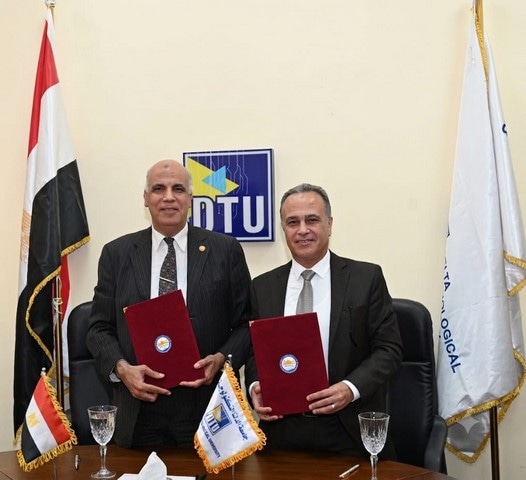
As part of the commitment of Egypt's research and academic institutions to unify their efforts and support the country's strategy for technological transformation and sustainable development, Prof. Mohamed Rashad Abdel Fattah, Acting Director of the City of Scientific Research and Technological Applications (SRTA-City), and Prof. Wagih Ahmed El-Askary, Acting President of Delta Technological University, signed the renewal of the cooperation protocol between the two institutions on Wednesday, July 22, 2026. The signing ceremony was attended by the deans of SRTA-City's research institutes and the deans of the university's faculties.This renewed partnership represents a continuation of the national journey toward a knowledge- and innovation-based economy. Both institutions have adopted an integrated approach that brings together scientific expertise and promotes collaborative research to drive comprehensive and sustainable development.Prof. Mohamed Rashad Abdel Fattah stated that the areas of cooperation focus on training, research and scientific studies, as well as technical applications in the fields of technological industries and new and renewable energy. He highlighted the participation of researchers from both institutions in conducting joint applied research according to approved work plans, maximizing the utilization of laboratory facilities, research centers, and production workshops available to both parties.He further emphasized SRTA-City's commitment to supporting technical and technological education by providing access to its distinguished scientific and technical expertise and contributing to the development of academic curricula and practical training for Delta Technological University students. He added that the partnership also includes the supervision of students' graduation projects by SRTA-City faculty members, the exchange of expertise in education and training, and the organization of joint training courses and workshops on topics of mutual interest.At the conclusion of the signing ceremony, Prof. Mohamed Rashad Abdel Fattah expressed his sincere appreciation to the administration of Delta Technological University for their warm welcome and generous hospitality. He praised the positive spirit and constructive exchange of ideas during the meeting, affirming that this fruitful collaboration will strengthen Egypt's research and technological ecosystem and contribute to the nation's sustainable development and prosperity.It is worth noting that Delta Technological University is one of Egypt's technological universities established under Law No. 72 of 2019. Located in the industrial zone of Quesna, Menoufia Governorate, the university aims to equip students with the practical and scientific skills required to meet the evolving demands of both the local and international labor markets.

Under the patronage of Prof. Mohamed Rashad Abdel Fattah, Acting Director of the City of Scientific Research and Technological Applications, and in collaboration with the Egyptian Knowledge Bank (EKB) and Elsevier, the City organized a specialized scientific lecture for researchers and their assistants entitled:"Modern Applications of Artificial Intelligence in Scientific Research: LeapSpace – AI Designed Specifically for Scientific Research, and the Egyptian Knowledge Bank Services for Research and Teaching."The event was held on Tuesday, July 21, 2026, in the presence of the deans of the research institutes and a large number of researchers and their assistants. The lecture was organized as part of the City's commitment to keeping pace with the rapid technological advancements and employing them to support and advance the research and educational ecosystem. It also aimed to introduce researchers to the latest AI-powered applications for scientific research while highlighting the comprehensive services provided by the Egyptian Knowledge Bank. The lecture was delivered by Dr. Eng. Khaled Lotfy Shaalan, Elsevier Customer Success Programs Manager for Africa and the Middle East, and Mr. Mohamed Salah Sobhy, Manager of the Scientific Courses Platform at the Egyptian Knowledge Bank.On this occasion, Prof. Mohamed Rashad Abdel Fattah emphasized that organizing this event reflects the City's strategy toward digital transformation and the integration of next-generation artificial intelligence tools into research practices. He noted that collaboration with leading organizations such as the Egyptian Knowledge Bank and Elsevier directly contributes to improving the quality of scientific research and innovation. He further stated that the City's ultimate objective is to empower its researchers with advanced technological capabilities, eliminate barriers that may hinder their work, enhance international scientific publishing, and improve the City's global ranking.The lecture was divided into two main sessions. The first focused on Elsevier's solutions, introducing participants to its advanced research tools and research performance indicators, in addition to demonstrating the capabilities of AI-powered platforms such as LeapSpace, Scopus AI, and Reaxys. The second session highlighted the services of the Egyptian Knowledge Bank, including an overview of the platform, its Scientific Courses Platform, and practical guidance on maximizing these resources to support scientific research and international publishing.The event concluded with an interactive discussion session, during which the speakers addressed participants' questions regarding the practical application of these advanced AI tools in their research projects and the most effective approaches to overcoming technical challenges encountered during international publishing. The session received widespread appreciation from attendees, who praised the relevance of the content and its alignment with the evolving demands of modern scientific research.

As part of the state's ongoing efforts to strengthen the link between academic research and the industrial sector and to promote sustainable development, a delegation from the City of Scientific Research and Technological Applications (SRTA-City), headed by Prof. Mohamed Rashad Abdel Fattah, Acting President of the City, participated in the First Cooperation Forum Between Industrial Research Leaders and Academic Research, organized by ROBEX International Company for Plastic and Acrylic Manufacturing at its headquarters in New Borg El Arab City on Thursday, July 16, 2026.The forum witnessed the participation of university presidents, vice presidents, senior academic leaders, distinguished scientists and researchers, as well as prominent industrialists, with the aim of establishing direct channels of communication that support the development of innovative local solutions to industrial challenges.Prof. Mohamed Rashad Abdel Fattah stated that cooperation between academic and research institutions and major industrial entities such as ROBEX International Company represents a cornerstone for achieving sustainable economic development. He emphasized that SRTA-City possesses advanced research infrastructure and distinguished scientific expertise capable of providing innovative technological solutions to the challenges facing the industrial sector.During his speech, Prof. Mohamed Rashad Abdel Fattah affirmed that SRTA-City's participation in this forum reflects its clear strategy of transforming scientific knowledge into tangible economic returns, in line with the state's vision of linking academic research with national industry. He added:"Our goal is not only to provide scientific consultations, but also to establish sustainable partnerships with major industrial organizations. Through these partnerships, we seek to leverage the City's advanced laboratories and the expertise of our scientists to support the development of production lines and deliver innovative technological solutions to manufacturing challenges, thereby enhancing the efficiency of Egyptian products and strengthening their competitiveness in global markets."